
Dental Conversion Optimization
From First Inquiry to Kept Appointment Every Time
Conversion optimization is the real issue when traffic is already coming in but results are not increasing. Moreover, calls are already coming in and forms are being submitted. Yet, booked appointments and show rates are not increasing as expected. As a result, this gap exists in your conversion path. Fortunately, closing it does not require additional ad spend.
Turn incoming dental inquiries into real, booked appointments that actually show up not just leads that disappear.
Booking Rate Improvement
After phone script optimization with structured frameworks, conversion rates increased significantly.
+42%
Cost Per Booked Appointment
Same ads spend; however, an optimized conversion path significantly improves efficiency throughout.
↓31%
Show Rate Achievement
furthermore, structured reminder sequences significantly improved patient attendance.
91%



Why Conversion Optimization Gaps Cost More Than Your Marketing Budget
Conversion optimization for dental practices identifies and closes the gaps where potential patients slip away. Specifically, it improves each stage of the journey from website visit to phone call, from phone call to booked appointment, and from booked appointment to actual patient attendance. As a result, more leads are successfully converted into completed treatments.
A practice generating 100 inquiries monthly but converting only 40 into kept appointments is not facing a marketing problem. Instead, the marketing worked; however, the conversion path leaked.
These gaps silently drain revenue every week. Nevertheless, fixing them often delivers more new patients than increasing ad spend, and it requires no additional advertising cost. Once systems are optimized, every future marketing dollar works harder because the infrastructure is already in place to capture the demand it generates.
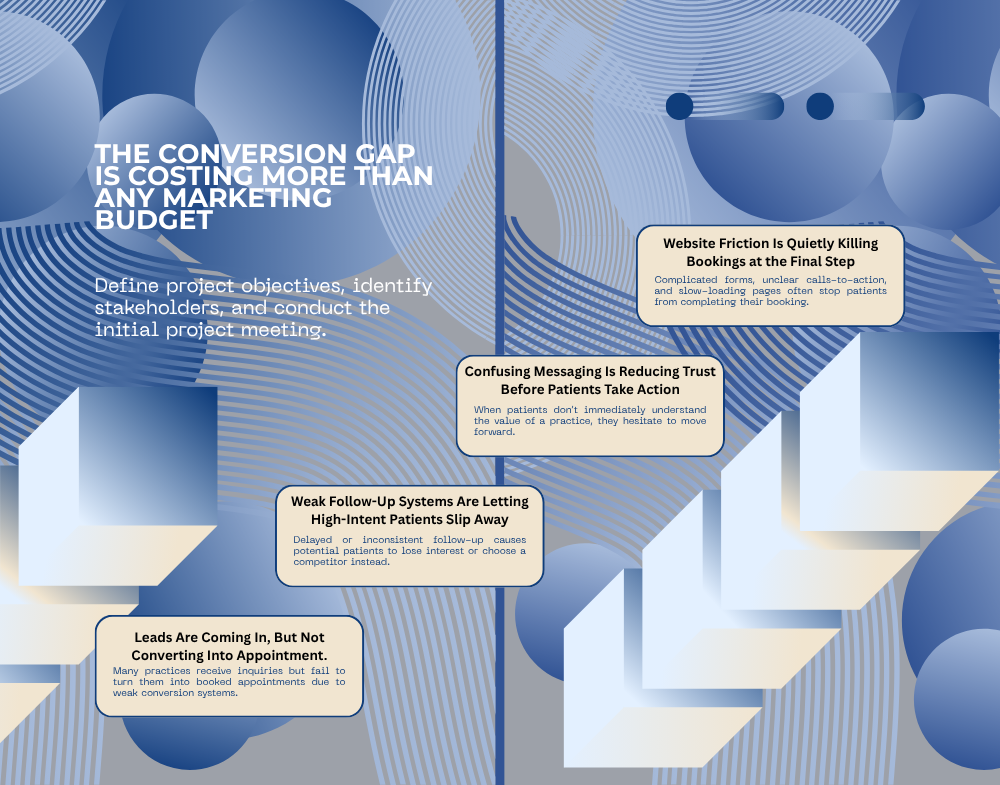
Conversion gaps compound silently; each missed call, unbookable inquiry, and no-show represents measurable lost production.
Where Dental Practices Lose Patients Due to Poor Conversion Optimization
Each conversion gap looks manageable in isolation. However, compounded across hundreds of inquiries annually, these gaps collectively drain tens of thousands in lost production.

Practice Revenue Audit
Missed calls (no callback)
−18%
Forms unbooked
−24%
Show rate (before)
72%
Show rate (after)
91%
Missed Calls Without Same-Day Callback Kill Conversion Optimization
A patient who does not hear back within the hour is already calling your competitor. In fact, research from Harvard Business Review shows that leads contacted within an hour are 7× more likely to convert.
Weak Phone Scripts Undermine Conversion Optimization
Front desk teams booking on instinct produce wildly inconsistent results. For example, one team member may convert 60% of calls, while another converts only 25%. However, the difference is not personality it is process.
No Structured Follow-Up Breaks Your Conversion Optimization
Cost questions should guide patients forward, not terminate conversations. In addition, when front desk staff quote prices without context, patients often hang up to "think about it" and, as a result, never call back.
Long Gaps Between Inquiry and Appointment Hurt Conversion Optimization
Every extra week between inquiry and appointment opens another window for the patient to cancel, forget, or find another provider. Consequently, practices with 3-week wait times lose significantly more patients than those offering appointments within 7 days.
Inconsistent Reminder Cadence Damages Conversion Optimization
No-shows spike when reminder timing is sporadic. However, a structured 48-hour, 24-hour, and day-of sequence alone measurably lifts show rates. Furthermore, the ADA notes that consistent communication directly impacts appointment adherence.
The Five-Stage Conversion Optimization Process
Systematic analysis of every touchpoint from first inquiry to kept appointment reveals where patients are lost. As a result, each stage presents opportunities to recover patients who would otherwise leak away.
Starts With an
Inquiry Capture Audit
Before optimizing conversion, it is essential to understand current performance. In turn, the audit reveals where the biggest leaks exist and therefore where optimization delivers the fastest ROI.
Audit Evaluates
- Missed call rate — what percentage of calls go unanswered during and after hours
- Response speed — how quickly do form submissions receive follow-up
- Form friction — how many fields does your contact form require
- CTA clarity — can visitors immediately identify how to contact the practice
Baseline data reveals where the biggest leaks are so that optimization begins in the right place.
Optimizing
Call Handling Optimization
Phone calls represent the highest-intent inquiries. In fact, patients who call have already decided to take action. Therefore, converting these calls requires refined scripts and consistent execution not personality alone.
Script Framework Includes
- Structured conversation flows — guiding callers toward appointments, not information dumps
- Price objection handling — reframes cost questions into consultation bookings
- Two-option close — offering two specific times rather than open-ended "when works?"
- Urgency framing — creating appropriate motivation without pressure tactics

Call recording review identifies specific improvement opportunities that subsequently produce measurable results.
Reducing Friction
Speed-to-Appointment Strategy
Long wait times kill conversions. As a result, patients who cannot get appointments within 7–10 days often book elsewhere or lose motivation entirely. In fact, scheduling restructuring sometimes delivers more growth than marketing increases.
Scheduling Analysis
- Slot availability — are new patient slots available within the optimal booking window
- Emergency reserves — are same-day or next-day slots held for urgent cases
- Quick-fill list — when cancellations occur, can the practice immediately fill those slots

Practices with 4-week waitlists often see high cancellation rates before appointments even occur.
Recovering Patients
Follow-Up Systems
Patients who inquire but do not book immediately are not lost they are simply undecided. Therefore, structured follow-up converts a significant percentage of these warm leads. In addition, stopping at one attempt is one of the most expensive habits in dental practice management.
Follow-Up Sequence
- Same-day text addressing questions and keeping the conversation open
- Next-day personal call addressing concerns and offering appointment times
- 7–14 day multi-touch email and text sequence for undecided patients
- 30–90 day reactivation campaigns for patients who inquired but never booked

Multi-touch follow-up recovers patients who were interested but simply were not ready at first contact.
Maximizing Show Rates
Confirmation & Reminder Optimization
Booked appointments mean nothing if patients do not show. Therefore, confirmation and reminder systems directly impact show rates. In fact, practices implementing structured sequences typically see show rate improvements of 10–20 percentage points.
Reminder Sequence
- 48-hour: Text and/or email confirming with preparation instructions
- 24-hour: Second confirmation with easy reschedule option built in
- Day-of: Morning reminder with directions and parking information
- Deposit strategy for high-value procedures or chronic no-show patients

A structured reminder sequence is consequently the single highest-ROI change most practices can implement immediately.
The Conversion Optimization Audit Process
A comprehensive audit identifies specific gaps and, in addition, prioritizes improvements by impact so that effort is directed where it produces the fastest and largest return on the practice’s time and investment.
- Call and form flow review how inquiries are captured and handled
- Follow-up process assessment sequences for non-bookers and form submissions
- Show-rate analysis examination of confirmation and reminder systems
- Website conversion review CTA placement, messaging, user experience
- Competitive comparison how conversion elements compare to local competitors
Audit Deliverables
Website Conversion Optimization Before the Phone Rings
Before phone calls happen, website visitors must decide to contact the practice. Therefore, dental web design directly impacts this decision, and in fact every element on the page either moves patients toward contact or allows them to leave.
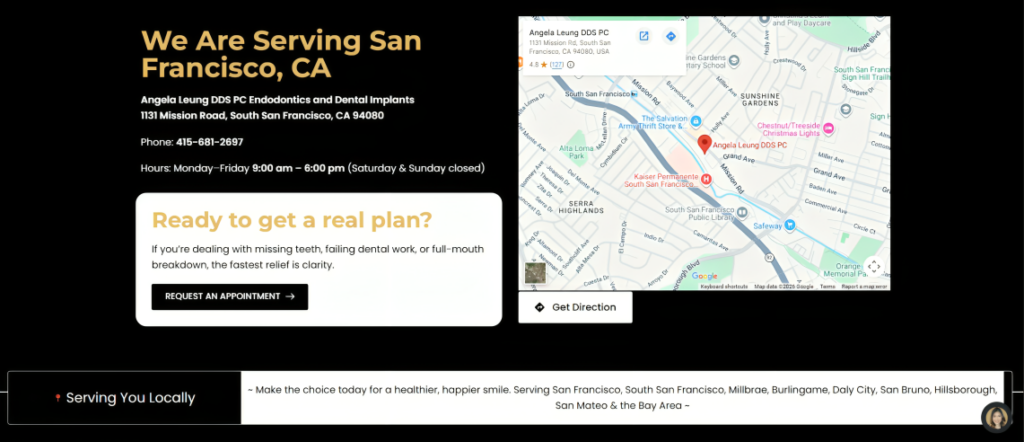
Above-the-Fold Clarity
Visitors decide within seconds whether to stay or leave. Therefore, the area visible without scrolling must immediately communicate what the practice offers, why it stands out versus competitors, and how to take the next step. However, generic welcome messaging wastes this critical real estate.
Trust Signal Placement
Reviews, credentials, and case photos build trust; however, they only work if visitors actually see them. Therefore, strategic placement near CTAs, on service pages, and embedded throughout content converts far better than isolated review pages that require navigation to find.
CTA Placement and Design
Call-to-action buttons buried below the fold get ignored. Therefore, effective placement includes a primary CTA visible above the fold, as well as sticky elements that follow as visitors scroll, CTAs after each major content section, and exit-intent offers when visitors show leaving behavior.
Form Optimization
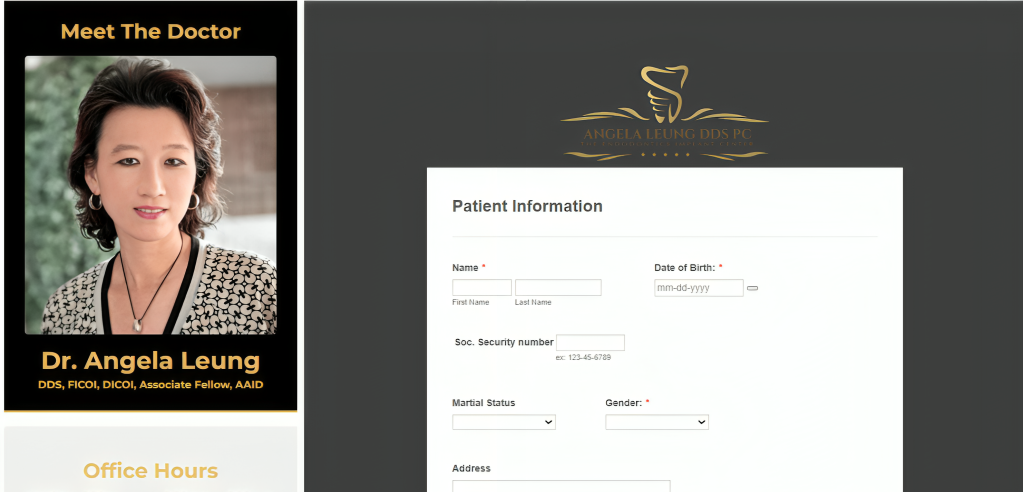
Every form field reduces completion rates. Therefore, effective dental contact forms require only name and phone. In addition, email can be optional or required based on follow-up strategy, while service interest works best as a helpful optional dropdown. However, forms requiring insurance information or date of birth before initial contact create unnecessary friction.
Service Page Optimization
Service pages should persuade, not just describe. In particular, dental landing pages designed for specific procedures convert significantly better than generic service descriptions. Therefore, each page needs to address patient concerns, handle objections, show social proof, and make booking the obvious next step.
Mobile Experience Is Critical to Conversion Optimization
Over 70% of dental searches happen on mobile. Therefore, click-to-call phone numbers, thumb-friendly CTA buttons, pages loading in under 3 seconds, and simplified navigation are baseline requirements not advanced optimizations.
Measuring Conversion Optimization Success
Website performance connects directly to practice outcomes. In addition, these metrics translate optimization work into business impact and clearly show how much the conversion path has improved.
| Metric | Before Optimization | After Optimization | Measurement Method |
|---|---|---|---|
|
Call answer rate |
70–80% |
90%+ |
Call tracking data |
|
Call-to-booking rate |
30–40% |
55–65% |
CRM tracking |
|
Form-to-booking rate |
20–30% |
40–50% |
Form + CRM data |
|
Show rate |
70–75% |
85–90% |
PMS comparison |
|
Cost per kept appointment |
Baseline |
↓25–40% |
Ad spend ÷ kept appts |
Common Conversion Optimization Mistakes
Most optimization efforts fail not from wrong strategy but from incomplete execution. However, these four mistakes silently undermine even well-designed systems.
Optimizing Website Without Fixing Phone Handling
A beautiful, high-converting website means nothing if phone calls go unanswered or get mishandled. Therefore, website and phone systems must be optimized together one without the other leaves significant revenue on the table.
THE FIX
Audit call handling before or alongside website optimization. After all, the best website cannot overcome poor phone experiences. As a first step, use call tracking to understand current performance before changing anything.
Implementing Systems Without Training
New scripts, follow-up sequences, and reminder systems fail without proper team training. In fact, technology alone does not change behavior. Staff who do not understand the purpose of a system find workarounds that undermine it.
THE FIX
Include training and accountability in every optimization implementation. Moreover, monitor adoption and provide ongoing coaching. Systems need people and people need context and practice to execute consistently.
Measuring Vanity Metrics
Website traffic, form submissions, and call volume feel good but do not measure what matters. For instance, a practice can have growing traffic and declining revenue simultaneously if conversion rates are falling. Therefore, kept appointments and production are the true success metrics.
THE FIX
Track the full funnel from inquiry to kept appointment. Then, identify where drop-offs occur and focus optimization there. Vanity metrics are interesting but kept appointment metrics are actionable.
One-Time Optimization Without Ongoing Monitoring
Conversion rates drift over time. Specifically, staff turnover, changing patient behavior, and system degradation erode initial improvements. As a result, a practice that optimized two years ago and has not revisited it is often performing at pre-optimization levels without realizing it.
THE FIX
Establish ongoing monitoring and periodic re-optimization. For example, quarterly audits maintain performance and catch degradation early. Conversion optimization is a system to maintain not a project to complete.
Conversion Optimization vs. More Advertising
Many practices respond to growth plateaus by increasing ad spend. However, if the conversion path leaks, more traffic simply means more leakage. In fact, the math tells the full story.
Option A — Increase Ad Spend 50%
More budget, same broken conversion path
Option B — Optimize Conversion
Same spend, fixed conversion path
Recommended
Who Benefits Most From Conversion Optimization
Conversion optimization delivers the highest ROI for practices with specific characteristics. In particular, these four practice profiles see the fastest, most measurable improvements.
Practices Already Receiving Inquiries Need Conversion Optimization
If calls and forms are coming in but appointments are not growing proportionally, conversion gaps exist. In turn, optimization captures the demand already being generated without spending another dollar on traffic.
Practices Running Paid Advertising Benefit Most From Conversion Optimization
Google Ads and Facebook Ads generate traffic. However, without conversion optimization, significant portions of that paid traffic leak away. As a result, optimizing conversion immediately improves advertising ROI from the same spend.
Practices With Rising No-Show Rates Need Conversion Optimization
Increasing no-shows indicate confirmation and reminder system failures. Therefore, optimization addresses the specific gaps causing patients to miss appointments and delivers measurable show rate improvement within weeks of implementation.
When Marketing Works But Revenue Doesn't Scale, Conversion Optimization Is the Fix
When marketing metrics look good but production does not match, conversion gaps exist somewhere in the patient journey. Therefore, this is the clearest signal that optimization not more marketing spend is the next best investment.
Conversion Optimization Amplifies Every Other Marketing Investment
Traffic generation without conversion infrastructure wastes budget. However, a comprehensive dental marketing strategy includes conversion optimization as a core component, not an afterthought.
SEO drives organic traffic that converts only if the conversion path is optimized. Rankings without conversion infrastructure produce vanity metrics, not patients.
Strong reviews improve conversion rates at all stage patients call with higher intent. Conversion optimization and reputation building directly reinforce each other.
GBP optimization drives high-intent calls and website visits. Conversion optimization ensures those interactions become appointments and kept production.
Retargeting brings back visitors who left without converting. Optimized conversion paths ensure those returning visitors actually book rather than bouncing again.
Finds Your Biggest Leak in 30 Minutes
Every dental practice has a conversion path. Most practices have gaps in that path they don’t see, leaking patients who were already interested, already motivated, already ready to book.